
⚠️ A broken spring means your door is NOT safe to use. Stop operating it and call us immediately — same-day service available.
Your Spring Just Broke. Here's What You Need to Know.
Garage door springs are under enormous tension — hundreds of pounds of stored force. When one breaks, it usually happens without warning, often with a loud bang. If you came home to a door that won't open, or you heard a sharp crack from the garage, a broken spring is the most likely culprit.
The door may look fine from the outside, but without a functional spring, the entire weight of the door transfers directly to your opener motor — a machine designed to guide the door, not carry it. Continuing to operate the door in this state risks burning out your opener, snapping your cables, and creating a genuinely dangerous drop hazard.
The right move: stop using the door and call a professional. We're available today.
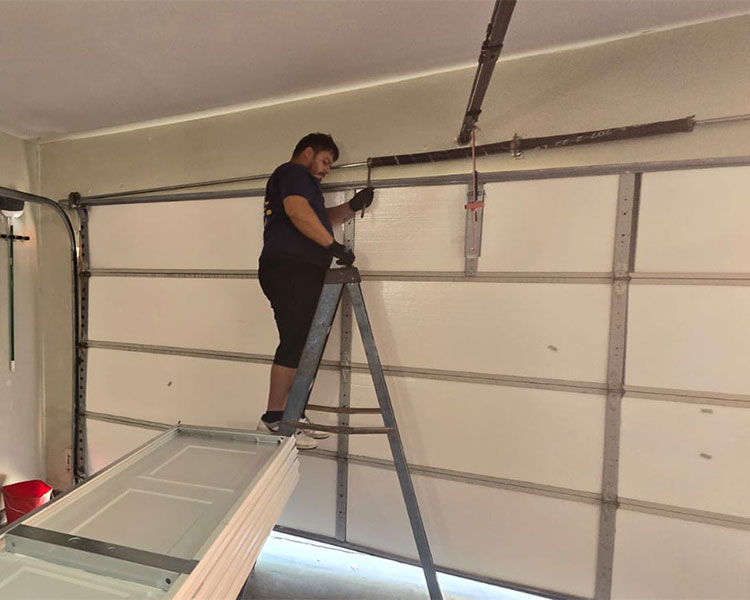
Don't wait for a broken spring.
We offer same-day garage door spring replacement across the DFW Metroplex, Greater Austin, and Greater San Antonio.
Warning Signs Your Garage Door Springs Are Failing
Springs don't always break suddenly. They often give warning signs for weeks before they give out completely. Watch for these indicators — and call us before the problem becomes an emergency.
🔊 A Loud Bang From the Garage
The most obvious sign — a snapping spring sounds like a gunshot inside the garage. If you heard this and the door won't move, a spring has failed. Do not attempt to open the door manually or with the opener.
🚫 Door Won't Open (Or Barely Moves)
If your opener motor runs but the door doesn't lift — or lifts only a few inches and stops — a spring is almost certainly broken. The opener can't compensate for the full weight of the door without a spring.
⚠️ Visible Gap in the Spring
A broken torsion spring will have a visible 2-4 inch gap in the coil, typically visible above the door. If you see a gap, the spring is broken and the door should not be used.
🐌 Door Opens Slowly or Unevenly
A spring that is losing tension — but hasn't broken yet — causes the door to feel heavy, open slowly, or become jerky and uneven in its movement. This is a sign that replacement is coming soon.
📉 Door Doesn't Stay Open
If your door drifts back down when you open it manually and let go, the springs have lost their tension balance. This is both inconvenient and potentially dangerous.
🪝 Cables Hanging Loose
When a spring breaks, the cables that work in tandem with it often go slack. Loose cables draped alongside the door tracks are a clear indicator of a failed spring.
⚠️ Why You Should Never DIY a Garage Door Spring Replacement
We understand the impulse to search "how to replace garage door spring" — but this is one repair that professionals in the industry consistently warn homeowners against attempting themselves. Here's why:
⚠️Torsion springs store hundreds of pounds of tension. A slip or miscalculation during winding can cause the spring to release suddenly, causing severe lacerations, broken bones, or worse.
⚠️Replacing a spring without matching it precisely to your door's weight and size will result in an imbalanced door, excessive wear, and future failures.
⚠️Extension spring replacement without securing the safety cables correctly creates a projectile hazard if the new spring breaks.
⚠️Incorrect installation can void manufacturer warranties on your opener and other components.
⚠️Most homeowners don't have the specialized winding bars, tension gauges, and safety equipment needed for the job.
The cost of a professional spring replacement is far less than an emergency room visit or the cost of replacing a damaged opener, cables, and tracks after a DIY repair goes wrong.
Trusted by Homeowners Across Texas
4.9 stars across 558+ verified reviews. Here's what customers say about our spring repair service.


Spring Repair FAQ
No gimmicks, no hidden fees — just clear answers to the things every homeowner wants to know before booking.
How long does a garage door spring replacement take?
Most spring replacements take between 45 minutes and 1.5 hours, depending on the spring type, number of springs, and whether any other components need attention. We give you an honest time estimate before we begin.
Should I replace both springs at the same time?
Almost always, yes — especially for extension springs. Springs are installed in pairs and wear at the same rate. If one breaks, the other is typically close behind. Replacing both at once saves you a second service call and keeps your door balanced. For torsion springs, we'll inspect and advise on the best approach for your specific setup.
How long should garage door springs last?
Standard springs are rated for approximately 10,000 cycles. If you open your garage door four times a day, that's roughly 7 years. High-cycle springs (25,000–50,000 cycles) last significantly longer and are worth the upgrade for high-use households.
Can I open my garage door manually with a broken spring?
Technically possible for a short time, but not recommended. A standard residential garage door weighs 150–300 lbs. Without the spring carrying that weight, you'll be lifting it all yourself — which creates a strain and safety risk, especially if the door slips. Call us instead.
What's the difference between a torsion spring and an extension spring?
Torsion springs are mounted above the door on a shaft and work by twisting. Extension springs run along the sides of the tracks and stretch. Most modern doors use torsion springs. Our technicians work with both types and will replace whichever system your door uses.
Call Now for Same-Day Spring Replacement
Licensed. Insured. High-cycle springs available. Warranty included. We're ready to come out today.
Or schedule online — we'll confirm your appointment within minutes.